My scientific career has been shaped by one deceptively simple question how does a material become soil? That question has taken me into landscapes where soils are only just beginning to form, from newly exposed sediments and weathered bedrock to disturbed and degraded ground where the normal processes of soil formation have been interrupted. I have spent much of my career studying the point at which geological material begins to behave as something more than substrate when roots enter, organisms colonise, organic matter accumulates, pores form, water begins to be regulated, and mineral particles become organised into a living system. Although soil formation is often presented as an exceptionally slow process, it is not governed by a single clock.
Roots can create new pores within months. Microorganisms rapidly colonise exposed surfaces. Organic matter alters aggregation, moisture retention and nutrient cycling over relatively short periods. Some aspects of soil formation take centuries, but others begin almost immediately once the right conditions are present. This has led me to become increasingly interested not only in how soils formed in the past, but in how we might help initiate soil-forming processes in the future. Across the world, many soils have become compacted, eroded, depleted of organic matter or stripped of their biological complexity. The deeper problem is not simply that they contain less carbon or support fewer organisms, but that they have lost some of their capacity to recover.
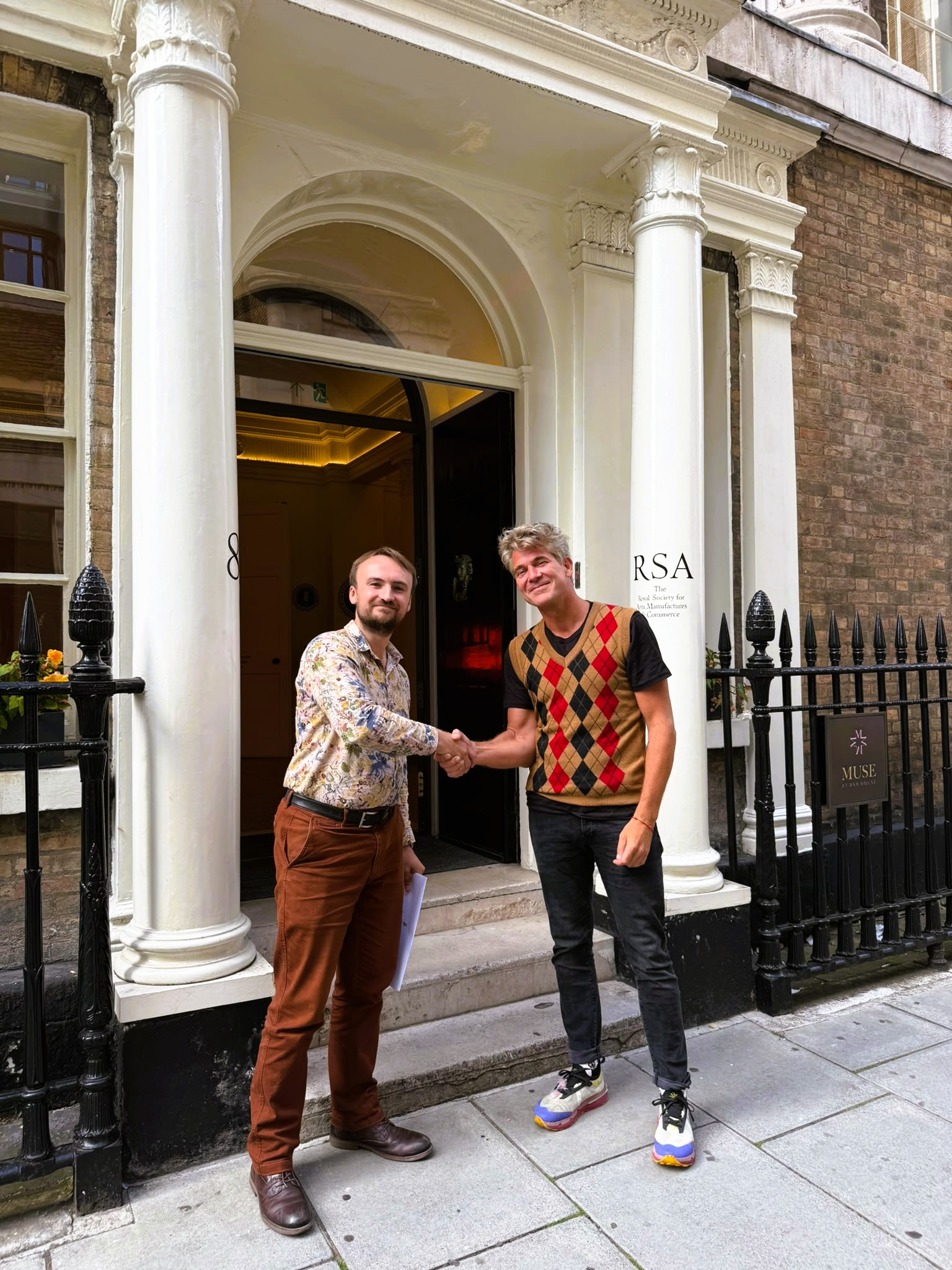
Their pores are disconnected, their organic resources depleted, their biology constrained and their future possibilities narrowed. I think of this as a loss of soil formation capacity a loss of the ability to develop, reorganise and become more functional through time. My meeting with Tom was exciting because Gentle Force speaks directly to that interest. Rather than asking how soil can be cut, turned or mixed more efficiently, it asks whether damaged ground can be interacted with in a way that helps restore the conditions from which soil formation can continue. Soil is not simply a collection of ingredients.
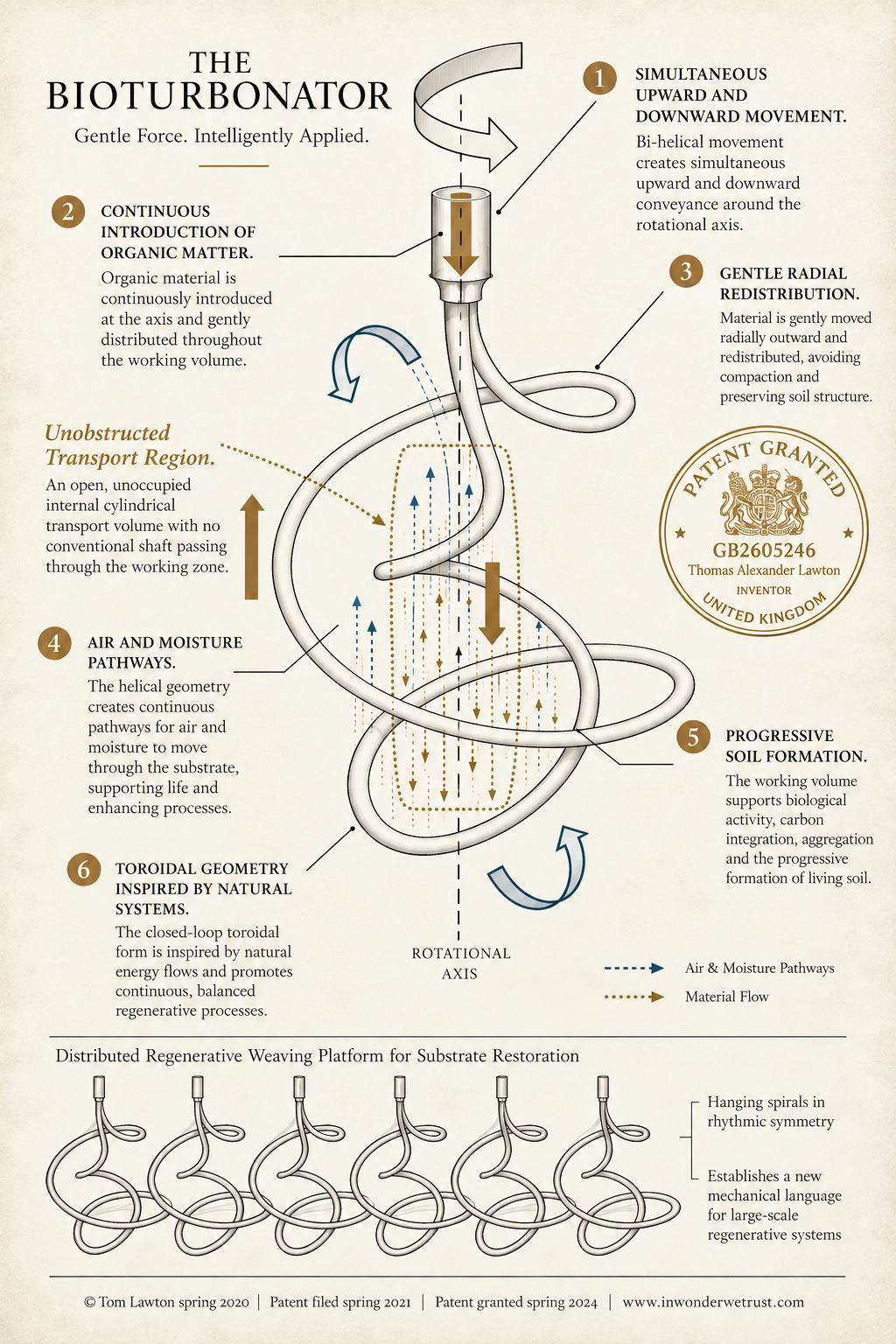
It is the organisation of mineral material, organic matter, water, air and biology into a functioning system that is capable of participating in its own further development. This is why the idea of weaving within Gentle Force resonates with me. Healthy soil is not static. It is organised movement. Roots grow and decay, water threads through pores, organisms transport particles, minerals dissolve and reform, and aggregates continually assemble and break apart. The Bioturbinator proposes a geometry that seeks not simply to move soil, but to support the progressive restoration of these soil-forming processes.
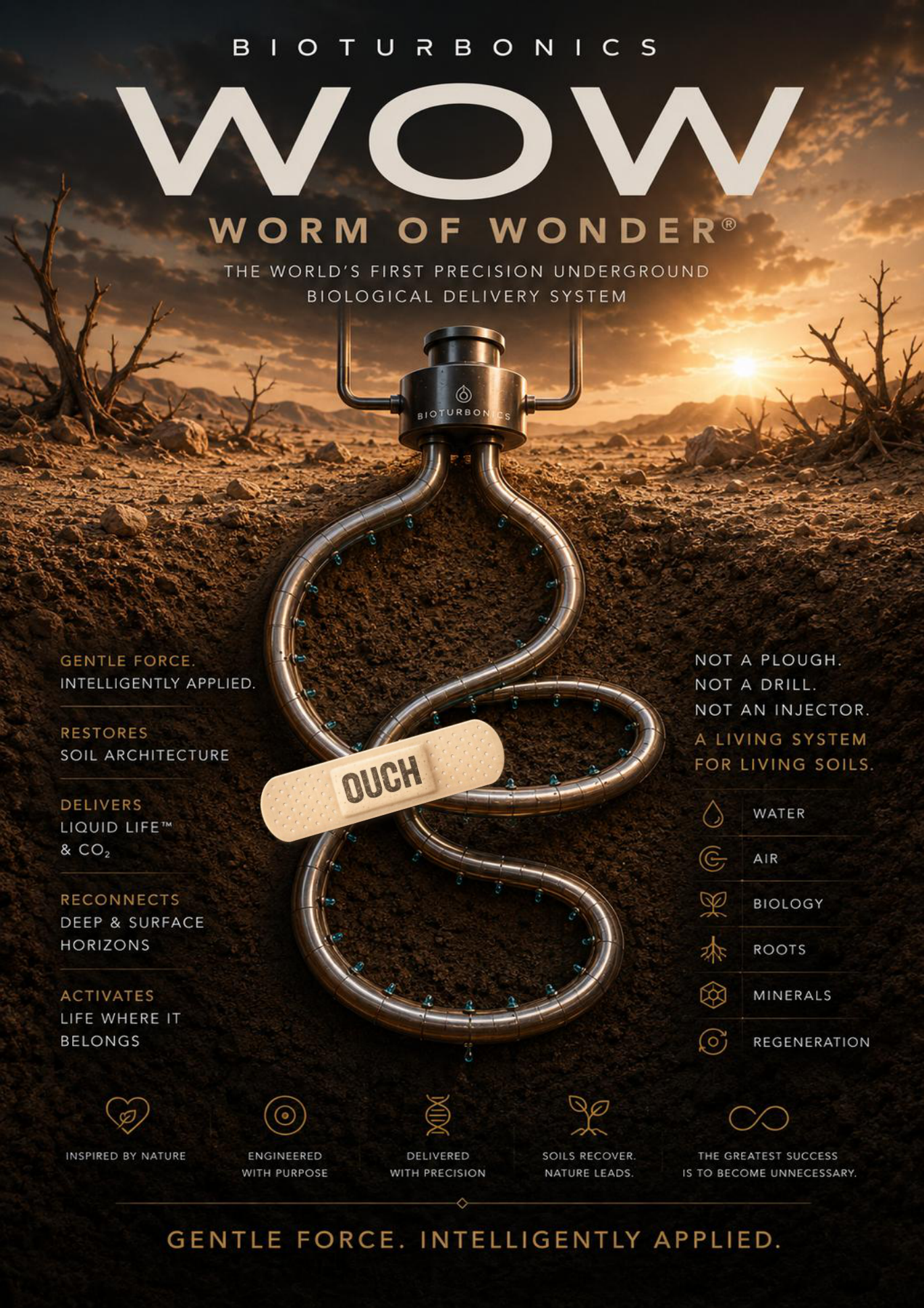
What interests me scientifically is the possibility that this geometry could interact with soil- forming material in a fundamentally different way from conventional cultivation tools, distributing its interaction through a greater volume of substrate while introducing organic matter, opening pathways for water and air, and reducing destructive fragmentation. The opportunity is not to manufacture a finished soil in a single intervention. The more compelling objective is to begin a trajectory helping compacted or depleted substrates become increasingly capable of developing structure, supporting biological colonisation, regulating moisture and integrating organic matter through time.
This idea connects strongly with my wider interest in what I call tomorrow's soils—the soils that may one day emerge on mine wastes, construction substrates, degraded agricultural land, urban rubble and semi-arid landscapes if the right conditions can first be established. Restoration should not simply recreate what once existed it should reopen the possibility of future development. At present, the Bioturbinator remains an engineering and scientific hypothesis rather than a validated technology, and its performance must be tested rigorously across a range of substrates and conditions. We need to understand not only its immediate effects, but whether those changes persist and whether treated materials become more capable of continuing their own development.
Some of the most important innovations begin with questions that have not yet been answered. Gentle Force asks whether engineering can participate more intelligently in soil formation not overpowering the ground, but creating conditions in which natural processes can resume their work. That question is deeply aligned with my own research interests, and it is why I believe Gentle Force deserves serious scientific investigation.